
Box Gutter Repair in Washington, D.C. (DC)
From farmhouse porches to Victorian blocks, Washington, D.C. runs on older homes with built-in gutters. We survey them, reline them and put every price on paper.
The call costs nothing and commits you to nothing. Any call-out fee for the survey is named when the date is set, and the written report follows the survey.
- Counties covered
- 1
- Region
- South
- Largest city
- Washington City
Dealing with water woes around your home is never a blast, especially when the issue is hiding. Luckily, getting those tricky internal rain channels fixed in Washington, D.C., doesn't have to be a headache. You can find local help to keep your property dry and sound.
What's the Deal with Your Hidden Rain Channels
Have you ever noticed some older homes around Washington, D.C., just don't have those visible plastic or metal troughs hanging from the roofline? Well, that's because many historical buildings and even some newer ones here use a different kind of water management system. These are often called internal water conduits or built-in drainage systems, tucked away within the roof structure itself.
Such a design gives a really clean, seamless look to your home, which many folks truly appreciate for its architectural appeal. Plus, these concealed rain catchers offer extra protection from ice dams and harsh weather, as they are less exposed to the elements than their external cousins. You essentially get a sleek profile that keeps your roofline clear and tidy.
Certainly, these deep, wide troughs are amazing at diverting downpours and shielding your home from moisture damage. You see, they're designed to collect water directly from the roof surface and guide it through a system of pipes, often hidden behind the walls. This intricate setup ensures rainwater travels safely away from your foundation.
Signs Your Integrated Drainage System Needs a Little TLC
Perhaps you've begun to notice some discolored patches on your ceilings or walls, particularly after a big rainstorm. Often, water stains are one of the earliest and most frustrating clues that your roof's secret waterway isn't doing its job anymore. Catching these damp spots early can honestly save you a ton of trouble down the road.
Furthermore, you might spot some paint peeling or wood rotting on the fascias or soffits, which are those boards right under your roof edge. You definitely need to take a closer look if you see any parts of the structure starting to sag or warp. These physical signs usually mean moisture has been creeping into places it absolutely shouldn't be.
Sometimes, you can even see drips or active leaks during heavy rainfall, especially from odd spots like the corners of windows or from the eaves themselves. Believe it or not, even tiny trickles can lead to big problems over time, so pay attention to anything that looks out of place. This helps you prevent small issues from turning into massive headaches.
Why You Can't Just Ignore a Leaky Water Pathway
Ignoring even a small drip from your integrated water conduit is like ignoring a tiny crack in a dam during a flood: it's just asking for trouble. Eventually, water finds its way into your home's structure, weakening wooden beams, plaster, and drywall. That sort of damage can quickly turn into a really expensive repair bill.
Also, constant dampness creates the perfect breeding ground for mold and mildew, which can seriously mess with your indoor air quality. Honestly, nobody wants to deal with those nasty spores making their family sick or causing respiratory issues. Keeping your home dry is crucial for everyone's well-being.
Moreover, if water continually saturates the ground near your foundation, it can lead to shifting soil and potentially crack the very base of your house. Fixing foundation issues is truly one of the most stressful and costly repairs any homeowner can face.
Common Headaches for These Built-In Water Managers
Living in Washington, D.C., means enjoying some gorgeous trees, especially during the cherry blossom season. However, all those beautiful leaves and blossoms eventually fall, and they love to find their way into your internal trough system. These clogs are super common and can quickly turn a properly functioning rain diverter into a leaky mess.
Then again, these square-sided rain collectors are often made of metal, which means they can eventually suffer from corrosion or rust. Over the years, exposure to varying weather conditions and moisture can weaken the material, leading to pinholes or larger gaps. This kind of wear and tear is just a natural part of an aging home, but it still needs attention.
Sometimes, the original installation might have been a bit off, or previous patch-up jobs simply weren't done correctly. Poorly executed repairs can actually make the problem worse, creating new weak spots where water can escape. You want a lasting fix, not a temporary band-aid.
Getting Your Roof's Secret Waterway Back in Shape
Thinking about tackling a repair on your embedded drainage system yourself might seem like a good idea to save a few bucks. However, these channels are often built right into the roof and wall structure, making them incredibly tricky and sometimes dangerous to access. Plus, specialized tools and knowledge are usually needed to do the job right.
Therefore, a truly effective repair often begins with a thorough inspection to pinpoint exactly where the issues are hiding and what's causing them. After that, any debris clogging the system needs to be meticulously cleared out to ensure a free flow of water. This initial clean-up is crucial for any lasting solution.
Next, the pros will typically patch up any holes or cracks, often using sealants or replacing sections of the rain carrier with new, durable materials. They understand the nuances of these unique systems and how to restore their full functionality. Which means you can relax knowing your home is well-protected against the elements.
What to Look for in a Pro Who Fixes These Rain Collectors
Finding someone who genuinely understands the quirks of a built-in water manager is key, especially with the unique architectural styles around the Capital. You want a crew with real experience in this specific kind of work, not just general roofers. Their specialized knowledge can save you from a lot of future headaches.
Also, make sure you ask for a written estimate that clearly details the scope of work and the materials they plan to use. You should also check that they are licensed and insured, just for your own peace of mind. This way, you're protected should anything unexpected happen during the repair.
Clearly, a good pro will be transparent about their process and happy to answer all your questions, no matter how small. They'll help you feel secure in your decision to trust them with your crucial water management system. This ensures you get a professional and reliable repair.
The Upside of a Perfectly Working Internal Trough
Getting your rain carrier system in tip-top condition offers so much more than just stopping a leak. You'll gain genuine peace of mind knowing your home is well-prepared for any of Washington, D.C.'s, sudden downpours or winter storms. This kind of thoughtful preparation truly saves you from a lot of worry.
Certainly, a well-maintained internal water conduit prevents those sneaky water problems from wreaking havoc on your property. You avoid expensive structural repairs, nasty mold growth, and potential damage to your home's foundation. This proactively protects your biggest investment.
Ultimately, keeping your embedded drainage system in excellent shape also helps maintain your home's overall curb appeal and value. You see, a dry, well-preserved house simply looks better and performs better over time. And that makes you feel good about your property around here.
Don't let those drips and damp spots get the better of your home. You deserve to live in a place that's dry and secure. Get a free quote from local professionals who know their way around these tricky internal rain channels in the Capital area.
What a box gutter is, and why yours leaks
A box gutter does not hang off the roof edge. It is built into the roof itself: a timber trough lined with metal or membrane, running behind a parapet wall or tucked between two roof slopes. Nearly every American home put up before 1950 with a flat front, and plenty of flat-roofed additions since, drains through one.
That hidden position is the whole problem. A hanging gutter fails in public, dripping where you can see it. A box gutter fails inward. The trough floor rusts through or a joint opens, and the water takes the shortest path into the house: along a beam, down a wall cavity, out through a ceiling ten feet from the actual hole.
By the time a stain appears, the leak has usually been running for seasons. This is why we open every job with a survey rather than a sales pitch. Someone has to stand in the trough, meter the timber and find out which of the six classic failures is at work before any fix is worth pricing.
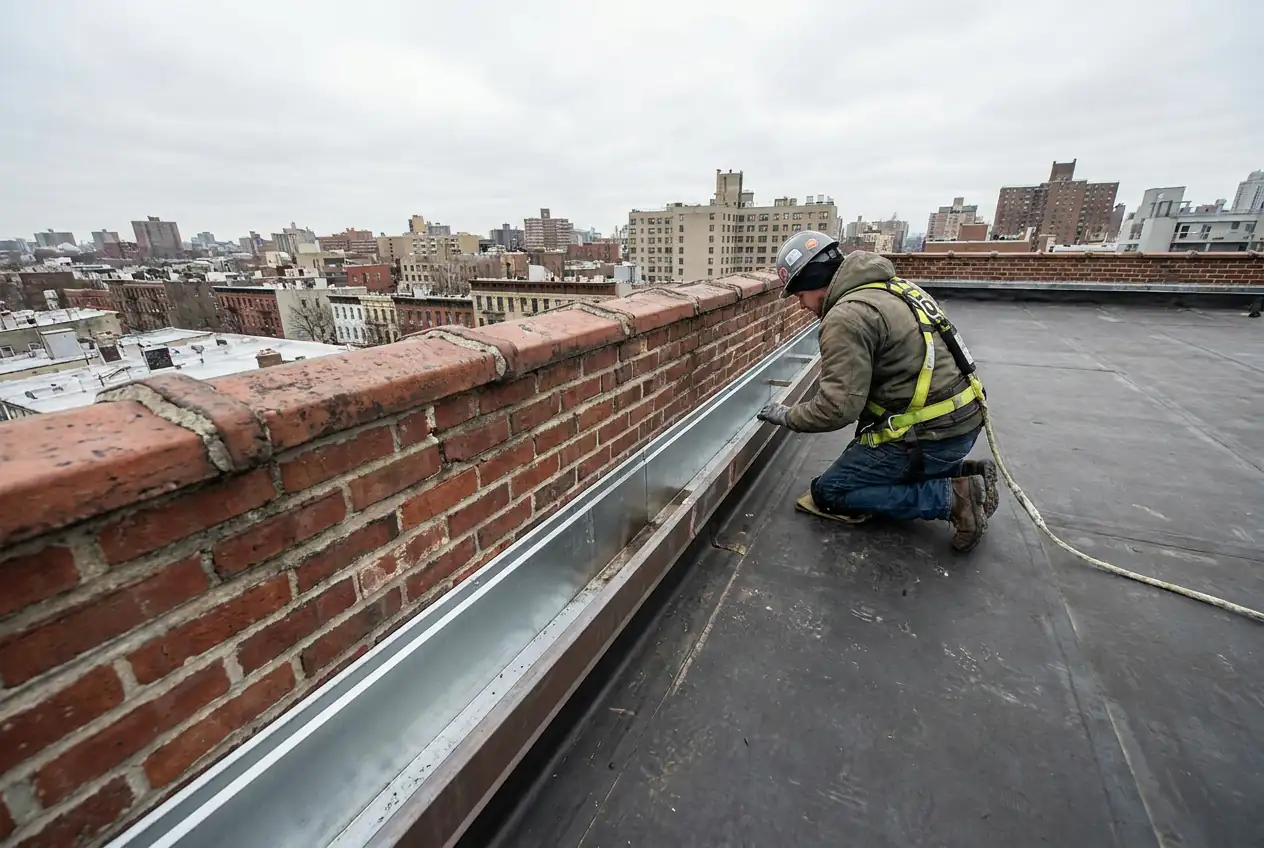
The six ways a trough gives up
Every survey checks all six, photographs what it finds and writes down which ones your roof actually has.
Lining options, with their honest lifespans
The survey decides this, not the brochure. When a coat of liquid is the wrong answer we say so, and when it is the right one nobody will talk you into a rebuild.
Troughs we have stood in
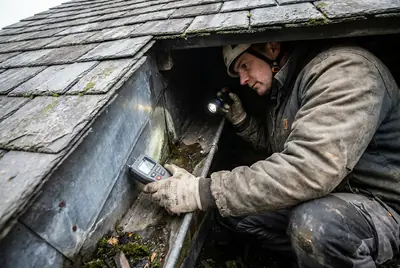
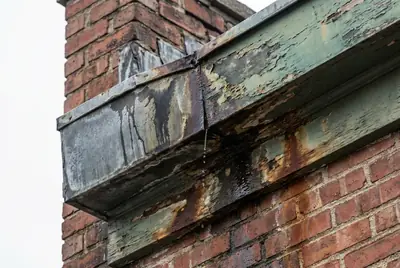
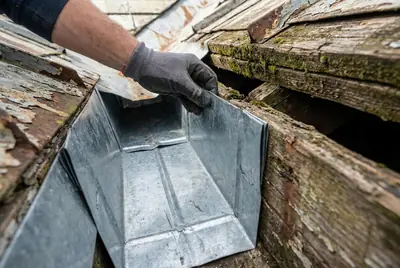
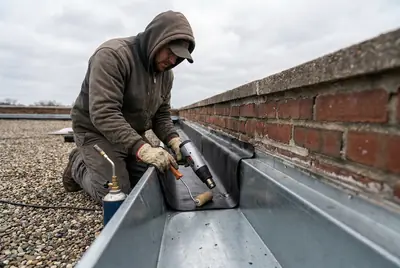
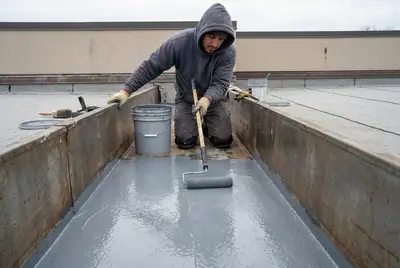
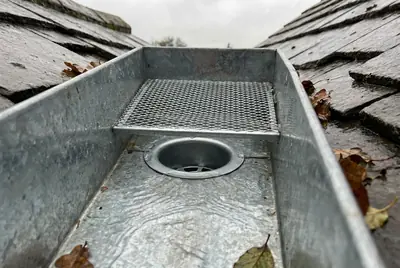
Homes that hide their gutters
Houses with history
Victorians, foursquares and rowhouses hide their gutters behind cornices and crown moldings, exactly where a ladder inspection never looks. The trough is often original, which means a century of patches over the first liner.
We work from the roof, keep the cornice profile intact and match liner details to the age of the house. The neighbors notice fresh paint, not our scaffold.
Flat roofs and additions
Parapet gutters on flat-roofed homes feed internal downpipes, so one blocked outlet can put water through every ceiling below. Porches and long additions add valley troughs that run well out of sight.
We schedule around family life, document every finding for you and your insurer, and can put the trough on a standing maintenance rota so the next blockage never becomes a claim.
Four moves, one dry house
- 1
Call the trough desk
One call to (844) 213-6324: ZIP code, what the gutter is doing and roughly when the home went up. Photos can wait for the survey, and the date is set before you hang up.
- 2
The roof survey
We walk the trough end to end, meter the timber, photograph every junction and lift what needs lifting.
- 3
The report and the quote
One document: what is failing, what can wait, and what each fix costs. You keep it whichever way you decide.
- 4
The repair or the reline
Liner in, outlets flowing, and a hose test before the ladder comes down for the last time.
The price of a dry trough
Length, access and how far the rot has traveled set the final number. The survey settles all three, and hearing the figure commits you to nothing.
Asked from under a stained ceiling
How do I know my house has a box gutter at all?
If the roof meets a parapet wall, if the front of the house is flat with no gutter visible from the sidewalk, or if two roof slopes meet over a wall, water is running through a built-in trough. Homes put up before 1950 nearly always drain this way.
Why is the stain ten feet from where you found the hole?
Because water is a traveler. It leaves the trough at the failure, follows a beam or a wall cavity, and only drops when it runs out of road. Chasing the stain instead of the source is how houses end up with three patches and the same leak.
Can you reline the gutter without touching the rest of the roof?
Usually, yes. The liner sits inside the trough and is independent of the slates, shingles or membrane around it. We tie the new liner into the existing covering at the edges, and the rest of the roof never knows we were there.
Metal or membrane, which liner should I want?
The honest answer is the one that fits your trough, not the one with the best margin. Sound timber and straight runs favor folded metal for its lifespan. Twisting runs, many outlets or a tight budget favor rubber or liquid. The report prices what fits.
How disruptive is the work for the household below?
Less than a leak is. Nearly everything happens at roof level behind edge protection. Life at home carries on, and for occupied houses we sequence noisy cutting outside the hours that hurt.
What if you find the gutter boards are rotten?
Then the report says so, with photographs, and prices the rebuild as its own line. Nobody discovers a doubled invoice halfway through the job. Rot found at survey stage is a plan; rot found mid-reline is an argument, and we prefer plans.
The rooflines around Washington, D.C.
Zoom in on the flat roofs and parapets; the link ledgers below name every community our surveyors reach from here.
Washington, D.C.: every county on the ledger
The towns that built Washington, D.C.
- Box Gutter Repair in Washington City, DC 684,498 on the census
- Box Gutter Repair in Washington, D.C., DC 601,723 on the census
- Box Gutter Repair in Columbia Heights, DC 31,696 on the census
- Box Gutter Repair in Shaw, DC 17,639 on the census
- Box Gutter Repair in Adams Morgan, DC 15,830 on the census
- Box Gutter Repair in Shipley Terrace, DC 11,528 on the census
- Box Gutter Repair in Chevy Chase, DC 9,545 on the census
- Box Gutter Repair in Washington Highlands, DC 8,829 on the census
- Box Gutter Repair in Logan Circle, DC 7,976 on the census
- Box Gutter Repair in Bloomingdale, DC 4,980 on the census
- Box Gutter Repair in Park View, DC 4,913 on the census
Also under South skies
- Box Gutter Repair in Alabama
- Box Gutter Repair in Arkansas
- Box Gutter Repair in Delaware
- Box Gutter Repair in Florida
- Box Gutter Repair in Georgia
- Box Gutter Repair in Kentucky
- Box Gutter Repair in Louisiana
- Box Gutter Repair in Maryland
- Box Gutter Repair in Mississippi
- Box Gutter Repair in North Carolina
- Box Gutter Repair in Oklahoma
- Box Gutter Repair in South Carolina
- Box Gutter Repair in Tennessee
- Box Gutter Repair in Texas
- Box Gutter Repair in Virginia
- Box Gutter Repair in West Virginia
Somewhere above these streets a trough is quietly rusting.
Call (844) 213-6324