
Box Gutter Repair in Wayne County, Illinois (IL)
Across Wayne County, we keep the box gutters of farmhouses, rowhouses and older homes doing their quiet job: survey first, then a liner or rebuild priced in writing.
The call costs nothing and commits you to nothing. Any call-out fee for the survey is named when the date is set, and the written report follows the survey.
Restoring your hidden roof drainage systems in Wayne County
You can fix those leaking internal troughs by scheduling a professional inspection today. These unique built-in channels protect your walls from water damage while maintaining the original look of your home. You should request a free quote now to stop leaks before they ruin your structural wood.
Why these architectural features matter
These internal drainage paths hide behind the eaves to give your roof a clean finish. Because they stay tucked away, they often catch leaves and debris that lead to major blockages. That hidden status means you need a pro to check them since you cannot easily see the buildup.
Regular maintenance prevents the overflow that eats away at your fascia boards. When you keep these conduits clear, the water flows away from your siding and foundation. Which means you can avoid expensive rot repairs by simply staying on top of the debris removal.
Signs that you need a professional assessment
You might notice peeling paint near your roofline when moisture escapes the trough. Another hint is water dripping where it should not after a light rain shower. If you spot these issues, you should act fast to prevent the water from seeping into your attic insulation.
Professional help ensures that the metal lining is still sealed tight against the wood. A good local contractor checks for pinhole leaks that escape the naked eye during a quick scan. This thorough attention to detail gives you the peace of mind that your roof will hold up through the next storm.
Technical aspects of your roof drainage
The lining usually consists of heavy gauge metal like galvanized steel or copper to resist rust. Because these materials expand and contract with the changing temperatures, the seams sometimes pull apart over time. A skilled installer knows how to apply the correct sealant to bridge these gaps for a lasting fix.
Proper pitch remains essential for moving water toward the downspouts effectively. If the slope is off by even a fraction, water pools and invites rust or structural decay. You should always hire someone who understands the local code and the specific climate challenges found around here.
Table of common drainage issues
| Problem | Effect on your home |
| Clogged debris | Water spills over the edges |
| Failed seams | Wood rot begins inside walls |
| Incorrect pitch | Standing water invites mosquito nests |
Benefits of timely intervention
Repairing these channels saves your wallet from the cost of replacing entire roof sections. Plus, you keep the historical character of your building intact by preserving the original design. That preservation is a huge win for your property value in the long run.
Your home stays dry when you prioritize these structural details during the changing seasons. Dealing with small leaks early prevents the need for a full overhaul later on. This proactive approach is the best way to handle your roofing maintenance needs.
Next steps for your property
You can describe your specific project details to receive a free quote from a pro. Simply provide information about the length and current condition of your hidden troughs. This easy process connects you with local technicians who have the right tools for the job.
Asking for a written warranty remains a smart move for any homeowner seeking quality results. Make sure your chosen pro is licensed and insured to protect yourself during the work. You deserve a dry home and a worry-free experience throughout the entire repair process.
The value of skilled craftsmanship
A true professional uses specialized techniques to solder seams for a permanent bond. Because these systems are integrated into the roof, they require careful handling to avoid accidental damage to shingles. You get better results when you hire a team that recognizes the nuance of internal gutter systems.
Getting a clear estimate allows you to budget properly for these essential upgrades. You will appreciate the difference that professional expertise makes when the next heavy rain hits. That level of quality makes your daily life much easier and protects your most valuable asset.
Protecting your home structure
Water is the enemy of any building when it wanders off its intended path. By routing runoff through these channels, you shield your siding and landscaping from constant erosion. Which makes it vital to keep your drainage troughs in peak condition throughout the year.
Requesting a quote today gives you the chance to address potential vulnerabilities before they grow. You can find local help by detailing your needs in the form below this article. That action puts you on the path to a sturdy and reliable home exterior.
Choosing the right local support
You want someone who understands the specific needs of homes in this Illinois area. Look for a technician who takes the time to explain the process and answers your questions clearly. A transparent pro is always a better choice than someone who rushes the evaluation.
Focus on finding a licensed contractor who understands the importance of precise metalwork. These professionals ensure that every inch of the trough is secure and functional for years to come. Your home will thank you for the extra attention to detail.
Final thoughts on maintenance
Preventative care is far cheaper than dealing with the aftermath of a major leak. You can rely on the local building codes and standards to guide the work. That knowledge keeps your home safe and ensures your investment stays protected against the elements.
Identify your drainage problems today and seek a free quote to get started. You have the power to stop damage in its tracks with a quick call to action. That simple step ensures your roof continues to do its job without any unexpected surprises.
Additional tips for your home
Watch for signs of rust or oxidation on the metal surfaces. If you see bright orange spots, it means the protective coating has likely failed. That is a clear sign to get a professional to provide a no-obligation estimate for the necessary repairs.
Keep your downspouts clear so that water has somewhere to go once it leaves the roof. If the path to the ground is blocked, the backflow will surely cause problems in the main channels. That simple flow control prevents many of the most common roofing headaches.
Why professional quotes matter
You get a clear picture of what the work entails before any tools come out. This preparation prevents mid-job surprises and helps you stay within your financial goals. You deserve the quality assurance that comes from knowing exactly how the work will happen.
Compare different options to find the approach that best fits your specific needs. You should feel comfortable with the plan before you commit to any repairs. That clarity is the secret to a successful project that leaves you smiling.
The importance of the metal lining
High-quality metal keeps the water contained exactly where it belongs. When you choose durable materials, you lower the frequency of your required maintenance cycles. That longevity makes your home a much better place to live over time.
Ensure that your roofing hardware remains free from blockages as often as you can. A quick look during the autumn months usually uncovers most hidden issues. That simple observation saves you from the stress of a flooded basement or rotted wall.
Taking action for your home
Request your free quote now to secure the future of your property. You deserve the confidence of knowing your home is safe from water intrusion. That is the best way to handle your gutter repair needs today.
What a box gutter is, and why yours leaks
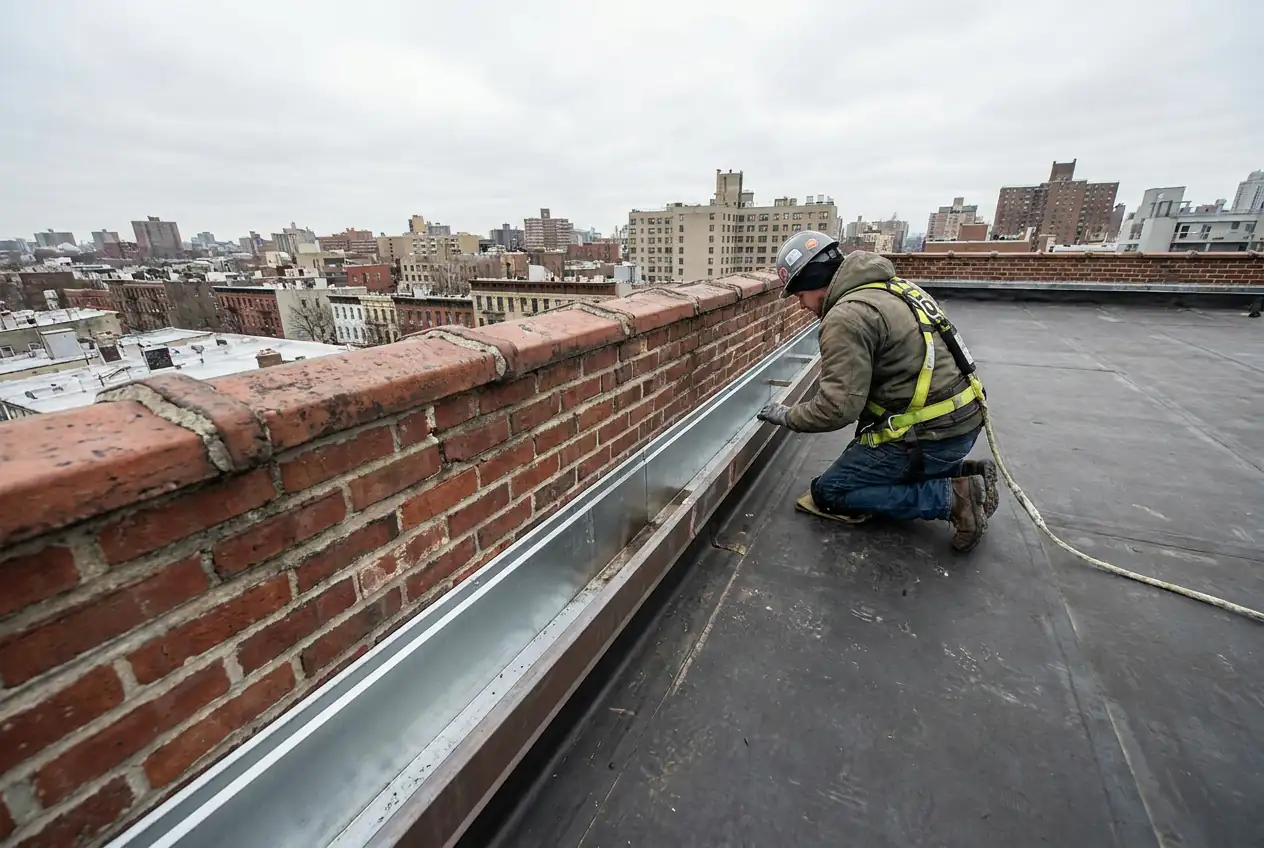
A box gutter does not hang off the roof edge. It is built into the roof itself: a timber trough lined with metal or membrane, running behind a parapet wall or tucked between two roof slopes. Nearly every American home put up before 1950 with a flat front, and plenty of flat-roofed additions since, drains through one.
That hidden position is the whole problem. A hanging gutter fails in public, dripping where you can see it. A box gutter fails inward. The trough floor rusts through or a joint opens, and the water takes the shortest path into the house: along a beam, down a wall cavity, out through a ceiling ten feet from the actual hole.
By the time a stain appears, the leak has usually been running for seasons. This is why we open every job with a survey rather than a sales pitch. Someone has to stand in the trough, meter the timber and find out which of the six classic failures is at work before any fix is worth pricing.
The six ways a trough gives up
Every survey checks all six, photographs what it finds and writes down which ones your roof actually has.
Lining options, with their honest lifespans
The survey decides this, not the brochure. When a coat of liquid is the wrong answer we say so, and when it is the right one nobody will talk you into a rebuild.
Troughs we have stood in
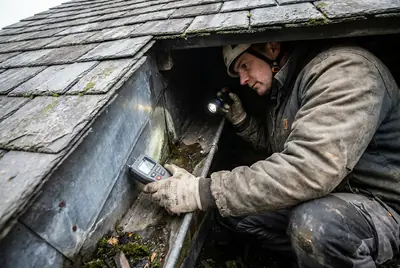
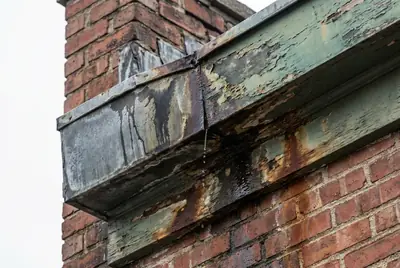
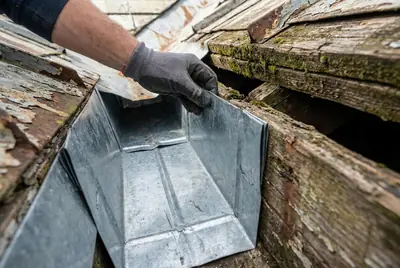
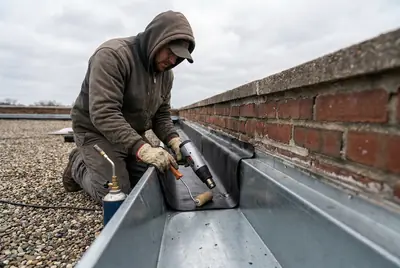
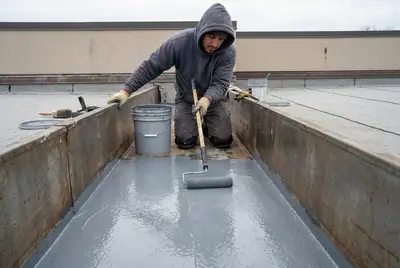
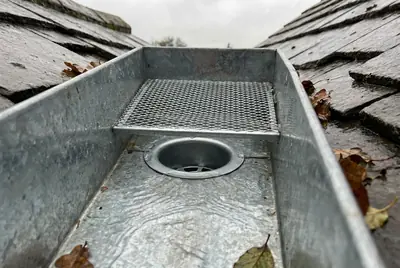
Homes that hide their gutters
Houses with history
Victorians, foursquares and rowhouses hide their gutters behind cornices and crown moldings, exactly where a ladder inspection never looks. The trough is often original, which means a century of patches over the first liner.
We work from the roof, keep the cornice profile intact and match liner details to the age of the house. The neighbors notice fresh paint, not our scaffold.
Flat roofs and additions
Parapet gutters on flat-roofed homes feed internal downpipes, so one blocked outlet can put water through every ceiling below. Porches and long additions add valley troughs that run well out of sight.
We schedule around family life, document every finding for you and your insurer, and can put the trough on a standing maintenance rota so the next blockage never becomes a claim.
Four moves, one dry house
- 1
Call the trough desk
One call to (844) 213-6324: ZIP code, what the gutter is doing and roughly when the home went up. Photos can wait for the survey, and the date is set before you hang up.
- 2
The roof survey
We walk the trough end to end, meter the timber, photograph every junction and lift what needs lifting.
- 3
The report and the quote
One document: what is failing, what can wait, and what each fix costs. You keep it whichever way you decide.
- 4
The repair or the reline
Liner in, outlets flowing, and a hose test before the ladder comes down for the last time.
The price of a dry trough
Length, access and how far the rot has traveled set the final number. The survey settles all three, and hearing the figure commits you to nothing.
Asked from under a stained ceiling
How do I know my house has a box gutter at all?
If the roof meets a parapet wall, if the front of the house is flat with no gutter visible from the sidewalk, or if two roof slopes meet over a wall, water is running through a built-in trough. Homes put up before 1950 nearly always drain this way.
Why is the stain ten feet from where you found the hole?
Because water is a traveler. It leaves the trough at the failure, follows a beam or a wall cavity, and only drops when it runs out of road. Chasing the stain instead of the source is how houses end up with three patches and the same leak.
Can you reline the gutter without touching the rest of the roof?
Usually, yes. The liner sits inside the trough and is independent of the slates, shingles or membrane around it. We tie the new liner into the existing covering at the edges, and the rest of the roof never knows we were there.
Metal or membrane, which liner should I want?
The honest answer is the one that fits your trough, not the one with the best margin. Sound timber and straight runs favor folded metal for its lifespan. Twisting runs, many outlets or a tight budget favor rubber or liquid. The report prices what fits.
How disruptive is the work for the household below?
Less than a leak is. Nearly everything happens at roof level behind edge protection. Life at home carries on, and for occupied houses we sequence noisy cutting outside the hours that hurt.
What if you find the gutter boards are rotten?
Then the report says so, with photographs, and prices the rebuild as its own line. Nobody discovers a doubled invoice halfway through the job. Rot found at survey stage is a plan; rot found mid-reline is an argument, and we prefer plans.
The rooflines around Wayne County
Zoom in on the flat roofs and parapets; the link ledgers below name every community our surveyors reach from here.
Every town worth a survey in Wayne County
- Box Gutter Repair in Fairfield, IL 5,421 on the census
- Box Gutter Repair in Wayne City, IL 1,089 on the census
- Box Gutter Repair in Cisne, IL 598 on the census
- Box Gutter Repair in Rinard, IL 463 on the census
- Box Gutter Repair in Geff, IL 366 on the census
- Box Gutter Repair in Sims, IL 138 on the census
- Box Gutter Repair in Golden Gate, IL 77 on the census
- Box Gutter Repair in Mount Erie, IL 74 on the census
- Box Gutter Repair in Johnsonville, IL 69 on the census
- Box Gutter Repair in Keenes, IL 67 on the census
Onward through Illinois, county after county
- Box Gutter Repair in Adams County, IL
- Box Gutter Repair in Alexander County, IL
- Box Gutter Repair in Bond County, IL
- Box Gutter Repair in Boone County, IL
- Box Gutter Repair in Brown County, IL
- Box Gutter Repair in Bureau County, IL
- Box Gutter Repair in Calhoun County, IL
- Box Gutter Repair in Carroll County, IL
- Box Gutter Repair in Cass County, IL
- Box Gutter Repair in Champaign County, IL
- Box Gutter Repair in Christian County, IL
- Box Gutter Repair in Clark County, IL
- Box Gutter Repair in Clay County, IL
- Box Gutter Repair in Clinton County, IL
- Box Gutter Repair in Coles County, IL
- Box Gutter Repair in Cook County, IL
- Box Gutter Repair in Crawford County, IL
- Box Gutter Repair in Cumberland County, IL
- Box Gutter Repair in De Witt County, IL
- Box Gutter Repair in DeKalb County, IL
- Box Gutter Repair in Douglas County, IL
- Box Gutter Repair in DuPage County, IL
- Box Gutter Repair in Edgar County, IL
- Box Gutter Repair in Edwards County, IL
- Box Gutter Repair in Effingham County, IL
- Box Gutter Repair in Fayette County, IL
- Box Gutter Repair in Ford County, IL
- Box Gutter Repair in Franklin County, IL
- Box Gutter Repair in Fulton County, IL
- Box Gutter Repair in Gallatin County, IL
Somewhere above these streets a trough is quietly rusting.
Call (844) 213-6324