
Box Gutter Repair in Runnels County, Texas (TX)
Across Runnels County, we keep the box gutters of farmhouses, rowhouses and older homes doing their quiet job: survey first, then a liner or rebuild priced in writing.
The call costs nothing and commits you to nothing. Any call-out fee for the survey is named when the date is set, and the written report follows the survey.
Fixing those bulky metal drainage channels in Runnels County
Getting your roof drainage system back in top shape prevents expensive water damage inside your home. These wide, rectangular metal troughs sitting along your roofline often collect debris and rust over time. A quick request for a free quote connects you with local pros ready to handle these tricky architectural features.
Why these wide metal channels need special care
Managing these heavy, built-in drainage paths requires a deep understanding of how metal expands under the hot Texas sun. Because they sit inside the roof structure, any leak can quickly rot your wooden rafters or ceiling joists. Proper sealing techniques stop water from seeping behind the metal and causing hidden structural decay.
Furthermore, ignoring small pinholes or loose seams turns a simple patch job into a major construction headache later. That maintenance keeps your foundation dry and protects your interior walls from unsightly water stains. Skilled hands use high-grade sealants to ensure the metal remains watertight throughout the changing weather patterns.
Signs your drainage system needs attention
Observing water spilling over the sides during a light rain clearly indicates a blockage or a sagging section. And that overflow often leads to soil erosion around your foundation, which causes shifting and cracks in your floors. Watching for rust spots or peeling paint along the trough edges alerts you to potential metal fatigue.
Besides that, you might notice wet patches on your ceiling or walls after a heavy storm rolls through. Those signs mean the water has already found a path inside your home. Acting fast by contacting a nearby professional prevents these small issues from ballooning into a total system replacement.
| Common Problem | Potential Benefit of Repair |
| Rust and corrosion | Stops water leaks and structural damage |
| Clogged debris | Prevents overflow and foundation soil erosion |
| Sagging metal sections | Restores proper water flow to downspouts |
| Failing seam sealant | Ensures a dry interior and prevents mold |
Choosing the right help for your drainage needs
Checking for a licensed and insured installer gives you peace of mind before any work begins on your roof. You should always ask about their process for cleaning out the channel and how they plan to test for future leaks. A good local pro provides a clear, written estimate so you know exactly what to expect before they start the job.
Additionally, ensuring your drainage professional understands the specific needs of these built-in roof troughs saves you significant money in the long run. They can often suggest a protective coating to extend the life of the existing metal by decades. This simple layer creates a shield against the elements and keeps everything flowing smoothly without requiring constant upkeep.
Taking the next step for your home
Securing your roof health starts with a simple conversation about the specific issues you see around your property. Describe your project to local service providers to receive a free quote with no obligation attached. That quick action secures your investment and ensures your home stays dry even during the most intense storms in the region.
Getting help today means you avoid the high costs of water damage and extensive structural repairs later. Your home deserves a durable drainage system that works perfectly for years to come. Simply reach out to local experts, explain your needs, and enjoy the relief of having a professional gutter restoration team ready to help.
What a box gutter is, and why yours leaks
A box gutter does not hang off the roof edge. It is built into the roof itself: a timber trough lined with metal or membrane, running behind a parapet wall or tucked between two roof slopes. Nearly every American home put up before 1950 with a flat front, and plenty of flat-roofed additions since, drains through one.
That hidden position is the whole problem. A hanging gutter fails in public, dripping where you can see it. A box gutter fails inward. The trough floor rusts through or a joint opens, and the water takes the shortest path into the house: along a beam, down a wall cavity, out through a ceiling ten feet from the actual hole.
By the time a stain appears, the leak has usually been running for seasons. This is why we open every job with a survey rather than a sales pitch. Someone has to stand in the trough, meter the timber and find out which of the six classic failures is at work before any fix is worth pricing.
The six ways a trough gives up
Every survey checks all six, photographs what it finds and writes down which ones your roof actually has.
Lining options, with their honest lifespans
The survey decides this, not the brochure. When a coat of liquid is the wrong answer we say so, and when it is the right one nobody will talk you into a rebuild.
Troughs we have stood in
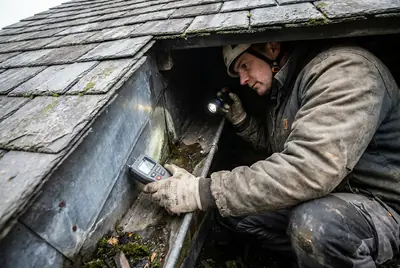
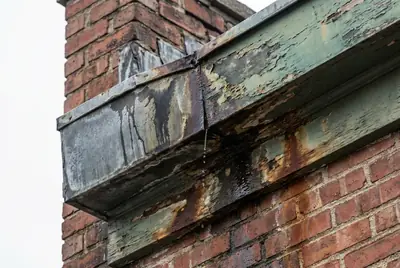
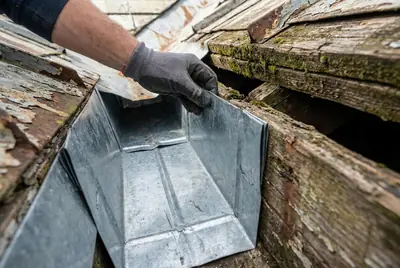
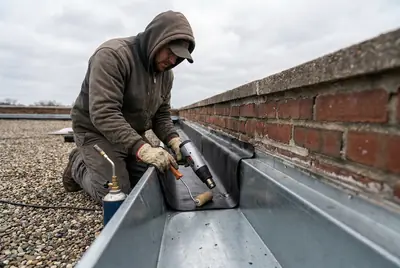
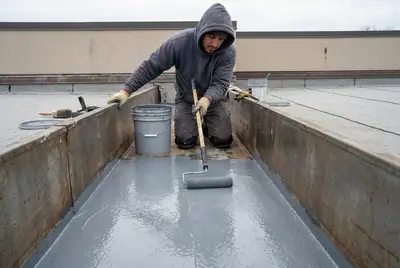
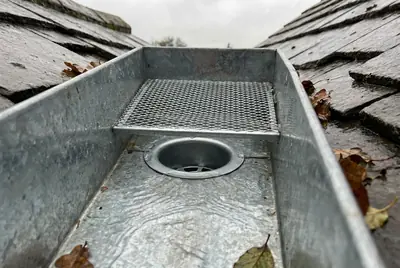
Homes that hide their gutters
Houses with history
Victorians, foursquares and rowhouses hide their gutters behind cornices and crown moldings, exactly where a ladder inspection never looks. The trough is often original, which means a century of patches over the first liner.
We work from the roof, keep the cornice profile intact and match liner details to the age of the house. The neighbors notice fresh paint, not our scaffold.
Flat roofs and additions
Parapet gutters on flat-roofed homes feed internal downpipes, so one blocked outlet can put water through every ceiling below. Porches and long additions add valley troughs that run well out of sight.
We schedule around family life, document every finding for you and your insurer, and can put the trough on a standing maintenance rota so the next blockage never becomes a claim.
Four moves, one dry house
- 1
Call the trough desk
One call to (844) 213-6324: ZIP code, what the gutter is doing and roughly when the home went up. Photos can wait for the survey, and the date is set before you hang up.
- 2
The roof survey
We walk the trough end to end, meter the timber, photograph every junction and lift what needs lifting.
- 3
The report and the quote
One document: what is failing, what can wait, and what each fix costs. You keep it whichever way you decide.
- 4
The repair or the reline
Liner in, outlets flowing, and a hose test before the ladder comes down for the last time.
The price of a dry trough
Length, access and how far the rot has traveled set the final number. The survey settles all three, and hearing the figure commits you to nothing.
Asked from under a stained ceiling
How do I know my house has a box gutter at all?
If the roof meets a parapet wall, if the front of the house is flat with no gutter visible from the sidewalk, or if two roof slopes meet over a wall, water is running through a built-in trough. Homes put up before 1950 nearly always drain this way.
Why is the stain ten feet from where you found the hole?
Because water is a traveler. It leaves the trough at the failure, follows a beam or a wall cavity, and only drops when it runs out of road. Chasing the stain instead of the source is how houses end up with three patches and the same leak.
Can you reline the gutter without touching the rest of the roof?
Usually, yes. The liner sits inside the trough and is independent of the slates, shingles or membrane around it. We tie the new liner into the existing covering at the edges, and the rest of the roof never knows we were there.
Metal or membrane, which liner should I want?
The honest answer is the one that fits your trough, not the one with the best margin. Sound timber and straight runs favor folded metal for its lifespan. Twisting runs, many outlets or a tight budget favor rubber or liquid. The report prices what fits.
How disruptive is the work for the household below?
Less than a leak is. Nearly everything happens at roof level behind edge protection. Life at home carries on, and for occupied houses we sequence noisy cutting outside the hours that hurt.
What if you find the gutter boards are rotten?
Then the report says so, with photographs, and prices the rebuild as its own line. Nobody discovers a doubled invoice halfway through the job. Rot found at survey stage is a plan; rot found mid-reline is an argument, and we prefer plans.
The rooflines around Runnels County
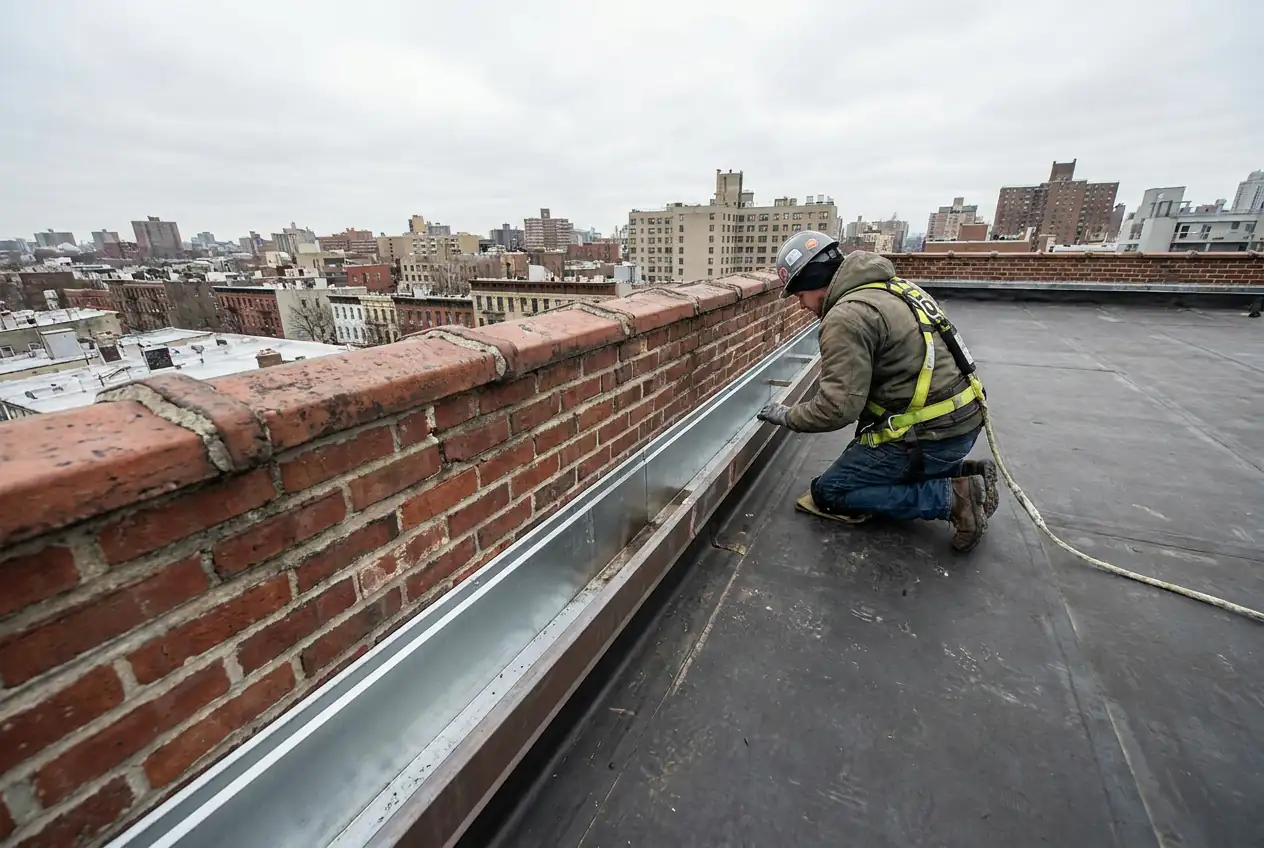
Zoom in on the flat roofs and parapets; the link ledgers below name every community our surveyors reach from here.
Every town worth a survey in Runnels County
- Box Gutter Repair in Ballinger, TX 3,669 on the census
- Box Gutter Repair in Winters, TX 2,866 on the census
- Box Gutter Repair in Miles, TX 988 on the census
- Box Gutter Repair in Valley View, TX 944 on the census
- Box Gutter Repair in Wingate, TX 216 on the census
- Box Gutter Repair in Norton, TX 76 on the census
Onward through Texas, county after county
- Box Gutter Repair in Anderson County, TX
- Box Gutter Repair in Andrews County, TX
- Box Gutter Repair in Angelina County, TX
- Box Gutter Repair in Aransas County, TX
- Box Gutter Repair in Archer County, TX
- Box Gutter Repair in Armstrong County, TX
- Box Gutter Repair in Atascosa County, TX
- Box Gutter Repair in Austin County, TX
- Box Gutter Repair in Bailey County, TX
- Box Gutter Repair in Bandera County, TX
- Box Gutter Repair in Bastrop County, TX
- Box Gutter Repair in Baylor County, TX
- Box Gutter Repair in Bee County, TX
- Box Gutter Repair in Bell County, TX
- Box Gutter Repair in Bexar County, TX
- Box Gutter Repair in Blanco County, TX
- Box Gutter Repair in Borden County, TX
- Box Gutter Repair in Bosque County, TX
- Box Gutter Repair in Bowie County, TX
- Box Gutter Repair in Brazoria County, TX
- Box Gutter Repair in Brazos County, TX
- Box Gutter Repair in Brewster County, TX
- Box Gutter Repair in Briscoe County, TX
- Box Gutter Repair in Brooks County, TX
- Box Gutter Repair in Brown County, TX
- Box Gutter Repair in Burleson County, TX
- Box Gutter Repair in Burnet County, TX
- Box Gutter Repair in Caldwell County, TX
- Box Gutter Repair in Calhoun County, TX
- Box Gutter Repair in Callahan County, TX
Somewhere above these streets a trough is quietly rusting.
Call (844) 213-6324