
Box Gutter Repair in Pierce County, Washington (WA)
Across Pierce County, we keep the box gutters of farmhouses, rowhouses and older homes doing their quiet job: survey first, then a liner or rebuild priced in writing.
The call costs nothing and commits you to nothing. Any call-out fee for the survey is named when the date is set, and the written report follows the survey.
Restoring Your Hidden Roof Drainage Channels in Pierce County
Fixing those deep rectangular roof troughs prevents water from rotting your eaves and causing expensive structural damage to your home. These hidden drainage systems often fail due to rusted metal seams or debris buildup that leads to overflow. You can easily get a free quote from a pro nearby to handle this maintenance task before the rain starts pouring down again.
Why These Drainage Systems Often Leak
Water sits in these wide, boxy channels if the slope is not perfect, which eventually corrodes the protective lining. This standing moisture wears down the seals at the joints and allows water to seep into the wood framing of your house. Because these systems are tucked inside the roofline, leaks often go unnoticed until you see staining on your interior ceilings.
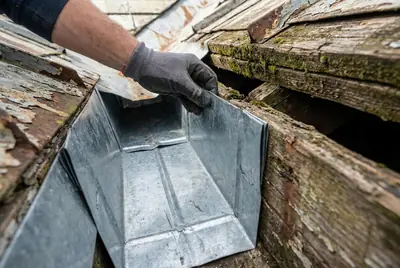
Fortunately, modern lining techniques offer a way to seal these gaps permanently without replacing the entire structure. These materials are highly durable and create a seamless barrier that stops leaks in their tracks. That means you get peace of mind knowing your foundation stays dry and protected from heavy moisture.
Identifying Common Problems Early
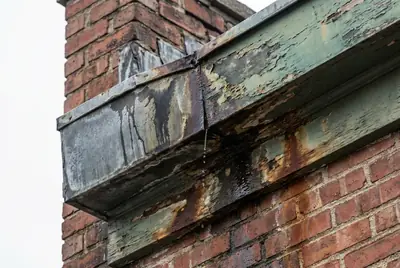
Peeling paint on your fascia boards often signals that the hidden channel behind them has developed a slow drip. You might also notice dark streaks on the outside of your exterior walls during a heavy storm. Checking these signs early saves you money by preventing the need for major carpentry work later on.
Most local pros suggest a thorough inspection when you notice these visual cues around your roofline. A licensed and insured worker understands how to identify subtle cracks that might lead to massive problems. That expertise ensures that the repair stays solid even during the wettest months in this part of Washington.
Table of Key Considerations for Your Roof Trough
| Feature | Primary Benefit |
| Seamless Membrane Lining | Prevents water from reaching sensitive wooden roof supports |
| Proper Downspout Clearance | Ensures fast drainage during heavy Pacific Northwest rainstorms |
| Reinforced Joint Sealing | Blocks leaks before they cause rot or mold growth |
Choosing the Right Support for Your Home
When you hire someone to look at these drainage components, verify that they carry the proper insurance to cover any accidental bumps. A qualified person should also provide a clear, written estimate that outlines exactly what needs fixing on your roof. This clarity ensures you receive the help you need without any unexpected charges appearing on your final bill.
You should always ask if the person uses high-quality sealant that withstands extreme weather fluctuations around this area. Using the right supplies creates a sense of ease because you know the fix will last through many seasons. Which means you can stop worrying about water damage and focus on other home projects.
Taking the Next Step for Your Roof
Addressing issues with your wide drainage troughs keeps your home structure sound and prevents long-term moisture buildup. If you notice any sagging or visible rust spots, reach out to a local professional to get a free quote today. You will find that taking quick action now prevents a much larger headache for you and your family down the road.
What a box gutter is, and why yours leaks
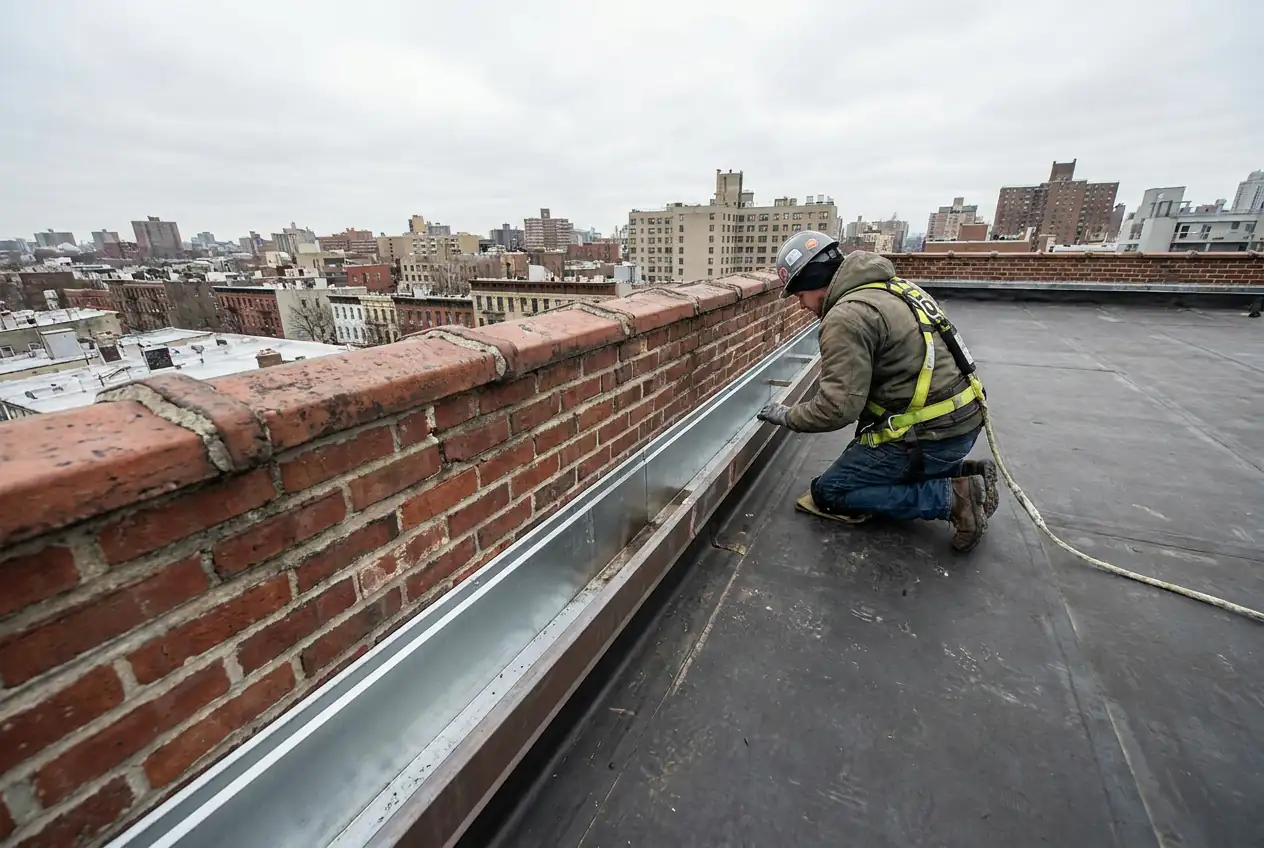
A box gutter does not hang off the roof edge. It is built into the roof itself: a timber trough lined with metal or membrane, running behind a parapet wall or tucked between two roof slopes. Nearly every American home put up before 1950 with a flat front, and plenty of flat-roofed additions since, drains through one.
That hidden position is the whole problem. A hanging gutter fails in public, dripping where you can see it. A box gutter fails inward. The trough floor rusts through or a joint opens, and the water takes the shortest path into the house: along a beam, down a wall cavity, out through a ceiling ten feet from the actual hole.
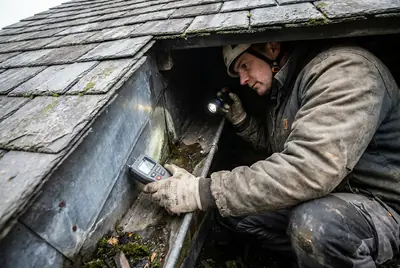
By the time a stain appears, the leak has usually been running for seasons. This is why we open every job with a survey rather than a sales pitch. Someone has to stand in the trough, meter the timber and find out which of the six classic failures is at work before any fix is worth pricing.
The six ways a trough gives up
Every survey checks all six, photographs what it finds and writes down which ones your roof actually has.
Lining options, with their honest lifespans
The survey decides this, not the brochure. When a coat of liquid is the wrong answer we say so, and when it is the right one nobody will talk you into a rebuild.
Troughs we have stood in
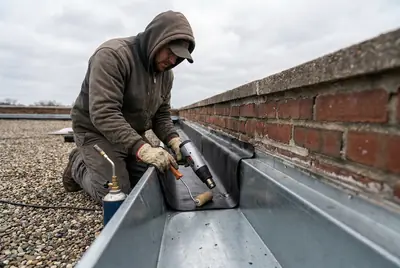
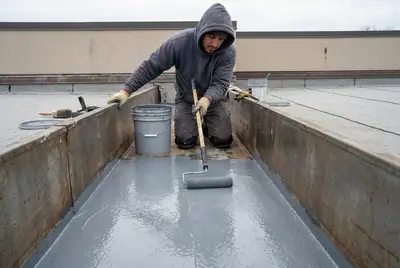
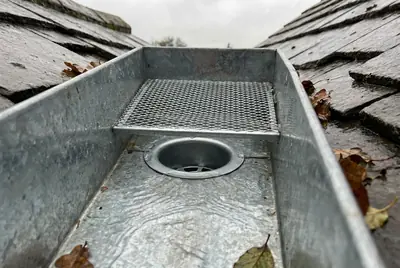
Homes that hide their gutters
Houses with history
Victorians, foursquares and rowhouses hide their gutters behind cornices and crown moldings, exactly where a ladder inspection never looks. The trough is often original, which means a century of patches over the first liner.
We work from the roof, keep the cornice profile intact and match liner details to the age of the house. The neighbors notice fresh paint, not our scaffold.
Flat roofs and additions
Parapet gutters on flat-roofed homes feed internal downpipes, so one blocked outlet can put water through every ceiling below. Porches and long additions add valley troughs that run well out of sight.
We schedule around family life, document every finding for you and your insurer, and can put the trough on a standing maintenance rota so the next blockage never becomes a claim.
Four moves, one dry house
- 1
Call the trough desk
One call to (844) 213-6324: ZIP code, what the gutter is doing and roughly when the home went up. Photos can wait for the survey, and the date is set before you hang up.
- 2
The roof survey
We walk the trough end to end, meter the timber, photograph every junction and lift what needs lifting.
- 3
The report and the quote
One document: what is failing, what can wait, and what each fix costs. You keep it whichever way you decide.
- 4
The repair or the reline
Liner in, outlets flowing, and a hose test before the ladder comes down for the last time.
The price of a dry trough
Length, access and how far the rot has traveled set the final number. The survey settles all three, and hearing the figure commits you to nothing.
Asked from under a stained ceiling
How do I know my house has a box gutter at all?
If the roof meets a parapet wall, if the front of the house is flat with no gutter visible from the sidewalk, or if two roof slopes meet over a wall, water is running through a built-in trough. Homes put up before 1950 nearly always drain this way.
Why is the stain ten feet from where you found the hole?
Because water is a traveler. It leaves the trough at the failure, follows a beam or a wall cavity, and only drops when it runs out of road. Chasing the stain instead of the source is how houses end up with three patches and the same leak.
Can you reline the gutter without touching the rest of the roof?
Usually, yes. The liner sits inside the trough and is independent of the slates, shingles or membrane around it. We tie the new liner into the existing covering at the edges, and the rest of the roof never knows we were there.
Metal or membrane, which liner should I want?
The honest answer is the one that fits your trough, not the one with the best margin. Sound timber and straight runs favor folded metal for its lifespan. Twisting runs, many outlets or a tight budget favor rubber or liquid. The report prices what fits.
How disruptive is the work for the household below?
Less than a leak is. Nearly everything happens at roof level behind edge protection. Life at home carries on, and for occupied houses we sequence noisy cutting outside the hours that hurt.
What if you find the gutter boards are rotten?
Then the report says so, with photographs, and prices the rebuild as its own line. Nobody discovers a doubled invoice halfway through the job. Rot found at survey stage is a plan; rot found mid-reline is an argument, and we prefer plans.
The rooflines around Pierce County
Zoom in on the flat roofs and parapets; the link ledgers below name every community our surveyors reach from here.
Every town worth a survey in Pierce County
- Box Gutter Repair in Tacoma, WA 210,103 on the census
- Box Gutter Repair in South Hill, WA 58,164 on the census
- Box Gutter Repair in Puyallup, WA 40,305 on the census
- Box Gutter Repair in Parkland, WA 37,185 on the census
- Box Gutter Repair in University Place, WA 32,907 on the census
- Box Gutter Repair in Spanaway, WA 32,150 on the census
- Box Gutter Repair in Graham, WA 28,194 on the census
- Box Gutter Repair in Frederickson, WA 22,935 on the census
- Box Gutter Repair in Bonney Lake, WA 20,313 on the census
- Box Gutter Repair in Elk Plain, WA 14,065 on the census
- Box Gutter Repair in Artondale, WA 13,172 on the census
- Box Gutter Repair in Prairie Ridge, WA 12,550 on the census
- Box Gutter Repair in Joint Base Lewis McChord, WA 11,046 on the census
- Box Gutter Repair in Edgewood, WA 10,599 on the census
- Box Gutter Repair in Fife, WA 9,968 on the census
- Box Gutter Repair in Sumner, WA 9,898 on the census
- Box Gutter Repair in Gig Harbor, WA 9,382 on the census
- Box Gutter Repair in DuPont, WA 9,379 on the census
- Box Gutter Repair in Midland, WA 9,208 on the census
- Box Gutter Repair in Waller, WA 7,894 on the census
- Box Gutter Repair in Orting, WA 7,732 on the census
- Box Gutter Repair in Summit View, WA 7,621 on the census
- Box Gutter Repair in Milton, WA 7,543 on the census
- Box Gutter Repair in Fircrest, WA 6,711 on the census
- Box Gutter Repair in Wollochet, WA 6,390 on the census
- Box Gutter Repair in Steilacoom, WA 6,270 on the census
- Box Gutter Repair in North Fort Lewis, WA 5,701 on the census
- Box Gutter Repair in Buckley, WA 4,680 on the census
- Box Gutter Repair in Rosedale, WA 4,512 on the census
- Box Gutter Repair in Wauna, WA 4,323 on the census
Onward through Washington, county after county
- Box Gutter Repair in Adams County, WA
- Box Gutter Repair in Asotin County, WA
- Box Gutter Repair in Benton County, WA
- Box Gutter Repair in Chelan County, WA
- Box Gutter Repair in Clallam County, WA
- Box Gutter Repair in Clark County, WA
- Box Gutter Repair in Columbia County, WA
- Box Gutter Repair in Cowlitz County, WA
- Box Gutter Repair in Douglas County, WA
- Box Gutter Repair in Ferry County, WA
- Box Gutter Repair in Franklin County, WA
- Box Gutter Repair in Garfield County, WA
- Box Gutter Repair in Grant County, WA
- Box Gutter Repair in Grays Harbor County, WA
- Box Gutter Repair in Island County, WA
- Box Gutter Repair in Jefferson County, WA
- Box Gutter Repair in King County, WA
- Box Gutter Repair in Kitsap County, WA
- Box Gutter Repair in Kittitas County, WA
- Box Gutter Repair in Klickitat County, WA
- Box Gutter Repair in Lewis County, WA
- Box Gutter Repair in Lincoln County, WA
- Box Gutter Repair in Mason County, WA
- Box Gutter Repair in Okanogan County, WA
- Box Gutter Repair in Pacific County, WA
- Box Gutter Repair in Pend Oreille County, WA
- Box Gutter Repair in San Juan County, WA
- Box Gutter Repair in Skagit County, WA
- Box Gutter Repair in Skamania County, WA
- Box Gutter Repair in Snohomish County, WA
Somewhere above these streets a trough is quietly rusting.
Call (844) 213-6324