
Box Gutter Repair in Kansas (KS)
From farmhouse porches to Victorian blocks, Kansas runs on older homes with built-in gutters. We survey them, reline them and put every price on paper.
The call costs nothing and commits you to nothing. Any call-out fee for the survey is named when the date is set, and the written report follows the survey.
- Counties covered
- 105
- Region
- Midwest
- Largest city
- Wichita
Is Your Roof's Hidden Rain Channel Causing a Flood of Headaches
Is your roof's hidden rain channel causing you grief around Kansas? Don't let those leaks turn into a watery disaster for your home. Finding pros for this tricky repair can save you a whole lot of future headaches and cash.
What in the world is this "hidden rain channel" anyway
Well, you see, some homes have this clever, built-in system that catches all the rainwater coming off the roof. Unlike those traditional half-round or K-style things you usually spot hanging outside, this setup is actually tucked right into the eaves or the roof structure itself.
And because it's often hidden from plain sight, you might not even realize it's there until you notice a suspicious drip or a spreading stain. That internal trough does a vital job directing water away from your home's foundation, which protects your entire structure from potential rot and erosion.
Why it's so darn important for your Kansas home
Considering the wild weather swings we get here in the Midwest, a robust water management system is absolutely crucial. From those heavy spring downpours to melting winter snow, your home takes a beating from the elements.
Therefore, a properly functioning built-in water catcher defends your siding from water streaks and saves your landscaping from getting eroded into sad little ditches. Plus, it keeps your basement dry and your wallet happier by preventing costly foundation repairs down the road.
Spotting Trouble: Is Your Concealed Drainage System Crying for Help
Sometimes, figuring out if that rectangular rain channel is acting up feels a bit like a detective game, mostly because you can't just glance up and see it. However, your house often drops subtle hints that something is amiss.
Therefore, paying attention to these little clues can save you from a major flood inside your walls or a collapsing ceiling later on. You don't want to find out the hard way.
The tell-tale signs you need to look for
One of the first things you might notice is water dripping or staining on your exterior walls, especially right below the roofline. That often means the integrated roof drain is overflowing or has a leak somewhere in its secret path.
Furthermore, keep an eye out for peeling paint on your fascia boards or discolored soffits, as these are classic indicators of water escaping where it shouldn't. You might also spot some mysterious puddles forming near your foundation after a good rain, which is a big red flag.
Occasionally, you might even detect a musty smell in your attic or upper-floor rooms, which points to hidden moisture issues that can lead to mold and mildew. This kind of problem not only smells unpleasant but also makes your indoor air quality take a nosedive.
A friendly warning from a neighbor's blunder
And because he waited so long, the repair ended up being a monumental task, involving not just fixing the internal plumbing but also replacing a chunk of drywall and dealing with a bunch of ruined insulation. That little oversight cost him a fortune, which taught him a tough lesson about proactive home upkeep.
Fixing the Drips: Your Options for That Recessed Water Handling System
So, you've figured out your clever roof recess for water needs some attention, and now you're probably wondering what kind of fix it's looking at. Luckily, there are a few ways to tackle these problems, from minor tweaks to more involved overhauls.
And knowing the different approaches helps you understand what local pros might suggest, which makes you a savvier homeowner when discussing the work.
Small leaks and simple fixes
Many times, issues with the hidden drainage route are due to cracked seams or degraded sealant. In these cases, a pro might just need to clean out the area thoroughly and apply a fresh, flexible sealant to seal up those pesky cracks.
Alternatively, if there's a small hole or a weak spot, they might use a patch made of similar material, which is often soldered into place for a watertight connection. This kind of repair can be pretty straightforward and usually costs less, saving you some unexpected cash.
When things get a bit more serious
However, if your interior roof channel has significant rust, widespread corrosion, or major structural damage, then a simple patch might not cut it. You might be looking at a partial replacement of a section, or even a complete relining of the entire channel.
And relining involves installing a new, continuous membrane inside the existing structure, which essentially gives your old system a brand-new, leak-proof interior. This method offers a much longer-lasting solution, which provides you with peace of mind for many years.
Sometimes, persistent ponding of water inside the channel causes ongoing issues, which points to a problem with the slope. A professional can often adjust the internal pitch to ensure water drains properly, thereby preventing future pooling and potential structural stress.
Choosing a Pro for Your Built-in Water Catcher in Kansas
Finding the right folks to mend your integrated roof drain is super important, especially given its hidden nature and the critical role it plays in protecting your home. You definitely want someone who knows their way around these unique systems.
Because the last thing you need is a quick fix that just leads to another leak party a few months down the road. Therefore, picking a reliable local crew is key to getting the job done right the first time.
What to look for in a local professional
First off, you'll want to make sure any professional you consider has proper licensing and insurance. This protects you from liability if anything goes sideways during the repair process, which lets you rest easy.
Also, don't hesitate to ask about their experience specifically with these types of internal drainage systems. A crew familiar with the ins and outs of concealed channels will know the best materials and techniques to use for a lasting repair, which means fewer worries for you.
It's always a smart move to request a written warranty on their work, too. This gives you recourse if problems pop up shortly after the repair, which offers you an extra layer of protection.
And since every home in the Sunflower State is different, a good pro will take the time to inspect your situation thoroughly before recommending a fix. They'll assess not just the obvious leak but also the underlying cause, whether it's accumulated debris, improper flashing, or simply age.
Get ahead of the water woes
Dealing with a leaky secret waterway along the eaves can feel like a real drag, but ignoring it only makes things worse. Those minor drips can quickly escalate into major damage, affecting your roof, walls, and even your foundation.
Therefore, taking action now means you can prevent a small problem from turning into an absolute nightmare for your home and your bank account. Why not get a clear picture of what needs doing?
To sum it all up, addressing those hidden water troubles is a smart investment in your home's longevity and your peace of mind. You deserve a dry and sound living space, without any unexpected indoor waterfalls.
Ready to finally put an end to those persistent drips and ensure your built-in water catcher is in tip-top shape? Getting a free quote from local professionals around here is a super easy step towards a worry-free home.
And by connecting with pros who really understand the unique challenges of properties in Kansas, you're taking the best step to protect your biggest investment. Don't let your home get soggy, reach out today.
What a box gutter is, and why yours leaks
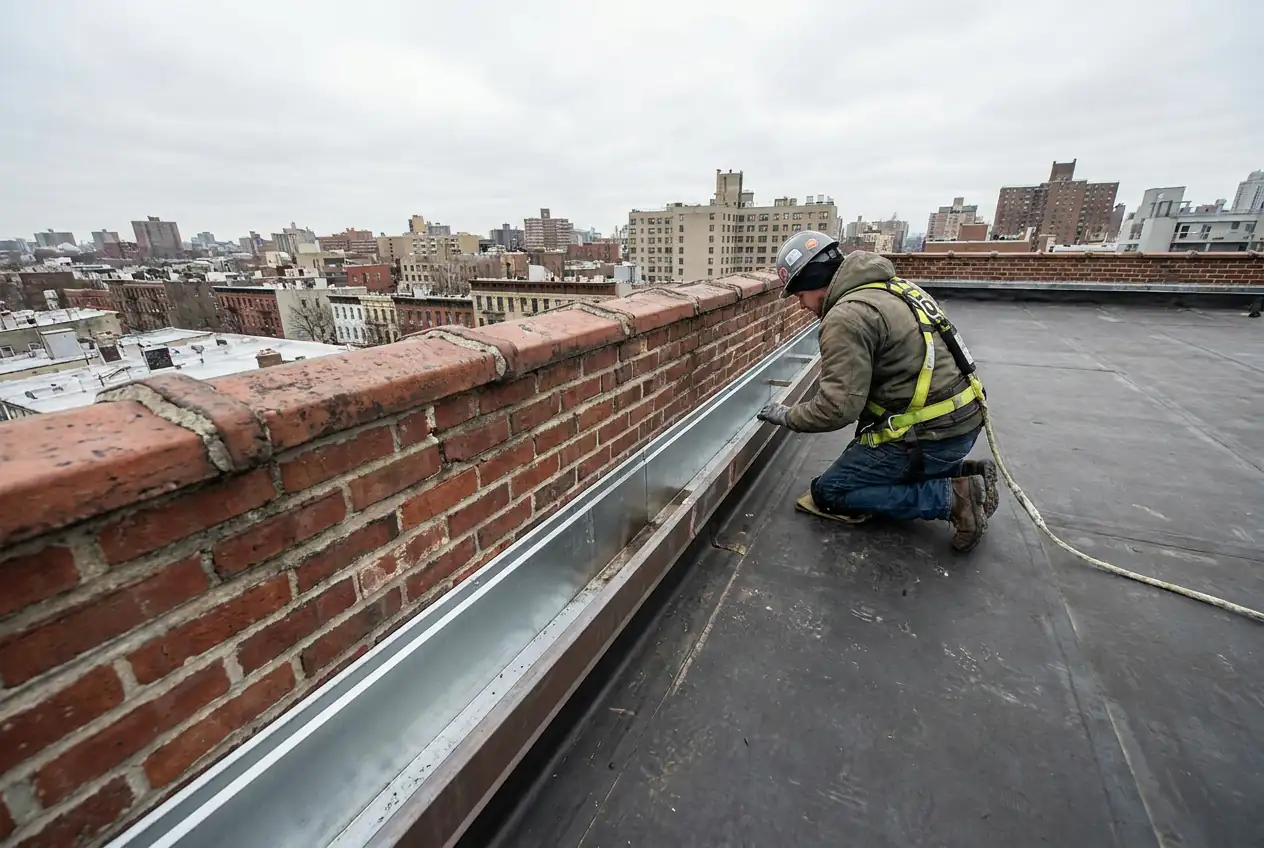
A box gutter does not hang off the roof edge. It is built into the roof itself: a timber trough lined with metal or membrane, running behind a parapet wall or tucked between two roof slopes. Nearly every American home put up before 1950 with a flat front, and plenty of flat-roofed additions since, drains through one.
That hidden position is the whole problem. A hanging gutter fails in public, dripping where you can see it. A box gutter fails inward. The trough floor rusts through or a joint opens, and the water takes the shortest path into the house: along a beam, down a wall cavity, out through a ceiling ten feet from the actual hole.
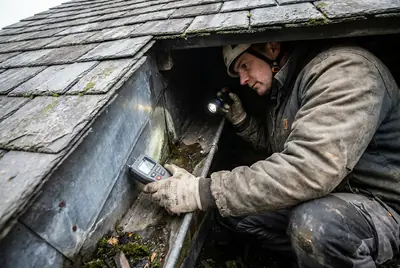
By the time a stain appears, the leak has usually been running for seasons. This is why we open every job with a survey rather than a sales pitch. Someone has to stand in the trough, meter the timber and find out which of the six classic failures is at work before any fix is worth pricing.
The six ways a trough gives up
Every survey checks all six, photographs what it finds and writes down which ones your roof actually has.
Lining options, with their honest lifespans
The survey decides this, not the brochure. When a coat of liquid is the wrong answer we say so, and when it is the right one nobody will talk you into a rebuild.
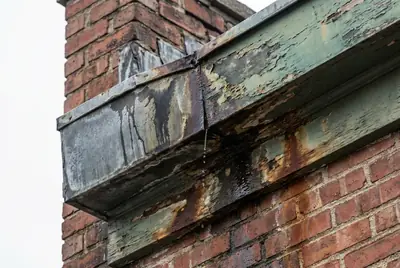
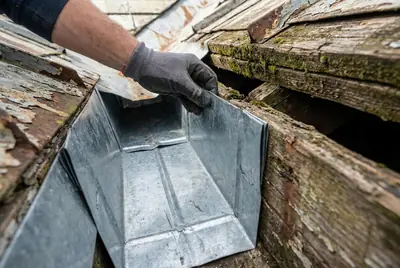
Troughs we have stood in
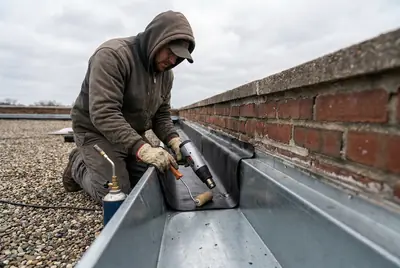
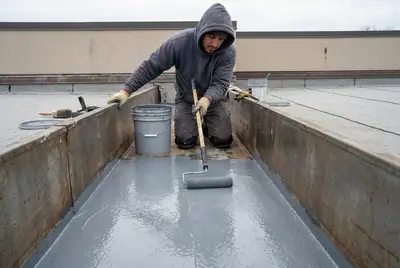
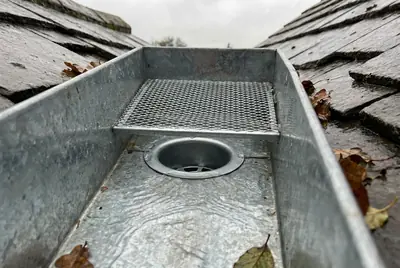
Homes that hide their gutters
Houses with history
Victorians, foursquares and rowhouses hide their gutters behind cornices and crown moldings, exactly where a ladder inspection never looks. The trough is often original, which means a century of patches over the first liner.
We work from the roof, keep the cornice profile intact and match liner details to the age of the house. The neighbors notice fresh paint, not our scaffold.
Flat roofs and additions
Parapet gutters on flat-roofed homes feed internal downpipes, so one blocked outlet can put water through every ceiling below. Porches and long additions add valley troughs that run well out of sight.
We schedule around family life, document every finding for you and your insurer, and can put the trough on a standing maintenance rota so the next blockage never becomes a claim.
Four moves, one dry house
- 1
Call the trough desk
One call to (844) 213-6324: ZIP code, what the gutter is doing and roughly when the home went up. Photos can wait for the survey, and the date is set before you hang up.
- 2
The roof survey
We walk the trough end to end, meter the timber, photograph every junction and lift what needs lifting.
- 3
The report and the quote
One document: what is failing, what can wait, and what each fix costs. You keep it whichever way you decide.
- 4
The repair or the reline
Liner in, outlets flowing, and a hose test before the ladder comes down for the last time.
The price of a dry trough
Length, access and how far the rot has traveled set the final number. The survey settles all three, and hearing the figure commits you to nothing.
Asked from under a stained ceiling
How do I know my house has a box gutter at all?
If the roof meets a parapet wall, if the front of the house is flat with no gutter visible from the sidewalk, or if two roof slopes meet over a wall, water is running through a built-in trough. Homes put up before 1950 nearly always drain this way.
Why is the stain ten feet from where you found the hole?
Because water is a traveler. It leaves the trough at the failure, follows a beam or a wall cavity, and only drops when it runs out of road. Chasing the stain instead of the source is how houses end up with three patches and the same leak.
Can you reline the gutter without touching the rest of the roof?
Usually, yes. The liner sits inside the trough and is independent of the slates, shingles or membrane around it. We tie the new liner into the existing covering at the edges, and the rest of the roof never knows we were there.
Metal or membrane, which liner should I want?
The honest answer is the one that fits your trough, not the one with the best margin. Sound timber and straight runs favor folded metal for its lifespan. Twisting runs, many outlets or a tight budget favor rubber or liquid. The report prices what fits.
How disruptive is the work for the household below?
Less than a leak is. Nearly everything happens at roof level behind edge protection. Life at home carries on, and for occupied houses we sequence noisy cutting outside the hours that hurt.
What if you find the gutter boards are rotten?
Then the report says so, with photographs, and prices the rebuild as its own line. Nobody discovers a doubled invoice halfway through the job. Rot found at survey stage is a plan; rot found mid-reline is an argument, and we prefer plans.
The rooflines around Kansas
Zoom in on the flat roofs and parapets; the link ledgers below name every community our surveyors reach from here.
Kansas: every county on the ledger
- Box Gutter Repair in Allen County, KS
- Box Gutter Repair in Anderson County, KS
- Box Gutter Repair in Atchison County, KS
- Box Gutter Repair in Barber County, KS
- Box Gutter Repair in Barton County, KS
- Box Gutter Repair in Bourbon County, KS
- Box Gutter Repair in Brown County, KS
- Box Gutter Repair in Butler County, KS
- Box Gutter Repair in Chase County, KS
- Box Gutter Repair in Chautauqua County, KS
- Box Gutter Repair in Cherokee County, KS
- Box Gutter Repair in Cheyenne County, KS
- Box Gutter Repair in Clark County, KS
- Box Gutter Repair in Clay County, KS
- Box Gutter Repair in Cloud County, KS
- Box Gutter Repair in Coffey County, KS
- Box Gutter Repair in Comanche County, KS
- Box Gutter Repair in Cowley County, KS
- Box Gutter Repair in Crawford County, KS
- Box Gutter Repair in Decatur County, KS
- Box Gutter Repair in Dickinson County, KS
- Box Gutter Repair in Doniphan County, KS
- Box Gutter Repair in Douglas County, KS
- Box Gutter Repair in Edwards County, KS
- Box Gutter Repair in Elk County, KS
- Box Gutter Repair in Ellis County, KS
- Box Gutter Repair in Ellsworth County, KS
- Box Gutter Repair in Finney County, KS
- Box Gutter Repair in Ford County, KS
- Box Gutter Repair in Franklin County, KS
The towns that built Kansas
- Box Gutter Repair in Wichita, KS 389,563 on the census
- Box Gutter Repair in Overland Park, KS 188,687 on the census
- Box Gutter Repair in Elmhurst, KS 173,372 on the census
- Box Gutter Repair in Kansas City, KS 152,069 on the census
- Box Gutter Repair in Olathe, KS 135,986 on the census
- Box Gutter Repair in Topeka, KS 126,877 on the census
- Box Gutter Repair in Lawrence, KS 95,294 on the census
- Box Gutter Repair in Shawnee, KS 65,239 on the census
- Box Gutter Repair in Manhattan, KS 55,489 on the census
- Box Gutter Repair in Lenexa, KS 53,051 on the census
- Box Gutter Repair in Salina, KS 47,230 on the census
- Box Gutter Repair in Hutchinson, KS 41,146 on the census
- Box Gutter Repair in Leavenworth, KS 36,008 on the census
- Box Gutter Repair in Leawood, KS 34,570 on the census
- Box Gutter Repair in Dodge City, KS 27,808 on the census
- Box Gutter Repair in Garden City, KS 26,806 on the census
- Box Gutter Repair in Emporia, KS 24,649 on the census
- Box Gutter Repair in Derby, KS 23,768 on the census
- Box Gutter Repair in Junction City, KS 23,703 on the census
- Box Gutter Repair in Prairie Village, KS 21,447 on the census
- Box Gutter Repair in Gardner, KS 21,351 on the census
- Box Gutter Repair in Hays, KS 20,956 on the census
- Box Gutter Repair in Pittsburg, KS 20,280 on the census
- Box Gutter Repair in Liberal, KS 20,251 on the census
- Box Gutter Repair in Newton, KS 18,923 on the census
- Box Gutter Repair in Great Bend, KS 15,544 on the census
- Box Gutter Repair in McPherson, KS 13,041 on the census
- Box Gutter Repair in El Dorado, KS 12,988 on the census
- Box Gutter Repair in Andover, KS 12,862 on the census
- Box Gutter Repair in Ottawa, KS 12,275 on the census
Also under Midwest skies
- Box Gutter Repair in Illinois
- Box Gutter Repair in Indiana
- Box Gutter Repair in Iowa
- Box Gutter Repair in Michigan
- Box Gutter Repair in Minnesota
- Box Gutter Repair in Missouri
- Box Gutter Repair in Nebraska
- Box Gutter Repair in North Dakota
- Box Gutter Repair in Ohio
- Box Gutter Repair in South Dakota
- Box Gutter Repair in Wisconsin
Somewhere above these streets a trough is quietly rusting.
Call (844) 213-6324